Sidebar:
Denison-Bonneau Park Protection Features
Denison-Bonneau Park is significant in the parks and protected areas system because it:
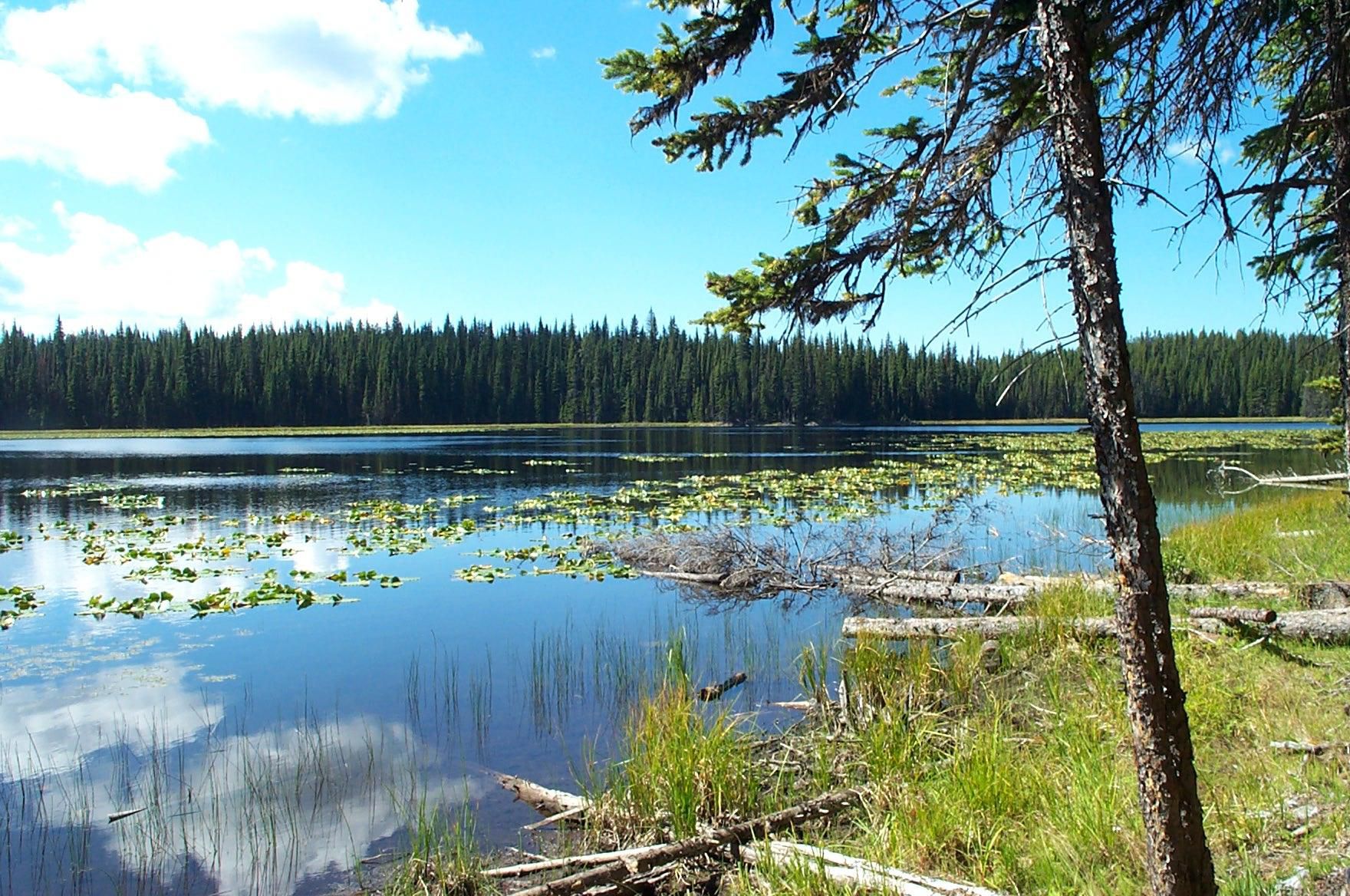
- Protects an intact lake ecosystem and subalpine forest environment situated in a unique geological area that contains regionally significant vestiges of past volcanic and glacial activity.
- Protects an underrepresented Biogeoclimatic (BGC) Zone (Montane Spruce) in the province (only 5.8% of this BGC zone is protected province wide).
- Assists in protecting grizzly bears (a blue-listed species) by providing provincial park protection within a larger Grizzly Bear Wildlife Habitat Area.
- Enhances protection within an approved Fisheries Sensitive Watershed.
- Contains remnant stands of old-growth forest and riparian values in an area which has undergone extensive logging. As such, the park acts as a refugia for many species.
- Provides for a multitude of exceptional recreational activities including hiking, angling, hunting, and camping opportunities in a remote and scenic backcountry setting.
- Protects an area with a high diversity of natural resources essential for food, social and ceremonial harvesting and cultural practices of First Nations.
- Denison-Bonneau Park is primarily within Montane Spruce Dry Mild- Okanagan forest subzone-variant. 12 hectares are within the Engelmann Spruce Subalpine fir Dry Cold- Okanagan forest subzone-variant.
- Twenty hectares of the park is represented by two fresh water lakes. Both these lakes (Denison and Bonneau) are the headwaters for creeks which bear their names. The lakes contain intact riparian/shoreline features which are essential for nutrient balancing and ensuring good water quality.
Denison-Bonneau Park contains important habitat for many species of raptors, waterfowl and shorebirds, upland bird species, and ungulates such as Deer (Whitetail/Mule Deer) and Moose, as well as smaller mammals including Marten, Porcupine and a variety of bat species. Unique geological features within the park (such as caves as well as moraine and lava deposits) create additional habitat features distinctive to the area.
Grizzly bears are known to frequent the Okanagan Highlands, where the park is situated, primarily because of its close proximity to the Monashee Mountains to the east, a rugged mountain range that contains the necessary foraging characteristics for grizzly bears (i.e., avalanche paths, sub-alpine and alpine meadows). It is postulated that grizzly bears are using the park seasonally as part of their migration cycle.
The land area around the park has been heavily affected by industrial logging that include vast clearcuts and associated road building; as such, the ‘island’ refuge characteristics of the park are unique.
The two lakes within the park, Denison and Bonneau, contain rainbow trout that are sourced from brood stock from the Summerland hatchery. Records indicate that stocking of Denison Lake dates back to 1970, whereas Bonneau Lake stocking began in 1988. Stocking continues in both lakes and in 2009, 300 Rainbow Trout were released into Denison Lake and 500 Rainbow Trout were released into Bonneau Lake.
Many local fishers have been concerned about ice fishing and the possibility of overfishing these lakes in the winter. There is no fisheries data for the numerous creeks and small tributaries within the park; however, with responsible stewardship, it appears that there is suitable spawning habitat at both lake outlets to provide a self sustaining fishery.
(30)
The importance of Denison-Bonneau Park to First Nations has been further researched and the park continues to provide an important association to food, social and ceremonial harvesting activities of First Nations as well as preserving important spiritual and cultural values.
Owing to the industrial land uses that have historically occurred outside of the park, such as logging and road building, the park assists greatly in providing habitat connectivity and refuge, especially in an era of climate change.
This park vision describes the future state and management regime that is desired for Denison-Bonneau Park over the next 25 to 50 years. The park vision provides long-term direction for park managers, while aiding them in making decisions regarding current issues. It is based on prevailing environmental and socio-economic attitudes concerning protected areas. It is, however, dynamic and conceptual and therefore allows for change due to evolving ideas regarding conservation and recreation and evolving ecosystems due to climate changes.
Nearby parks and protected areas in the Monashee include Graystokes Park 12 kilometers to the south and Echo Lake Park only 4 kilometres to the north. The site was recommended for protection because of its two scenic lakes and popular recreational fishery situated within a predominately spruce forest. Much of the land area around the park has been heavily impacted by industrial logging which is part of the Okanagan Timber Supply Area. BC Parks considers the park as being situated within the Northern Okanagan Highland Ecosection.
The name Denison originates from the late Normal L. Denison, whose trapline went near the lake. Denison settled in Creighton Valley in 1908, farming and trapping and raising a family there until 1959. Bonneau originates after two brothers, Casemir and Felix Bonneau who were early pioneers and farmers in the area.
Mysterious Geological Features
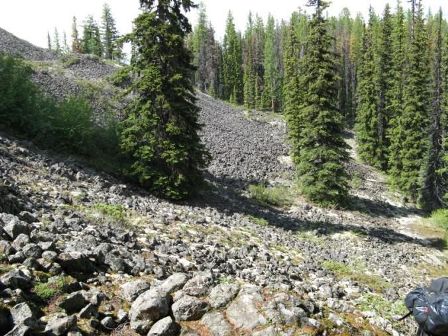
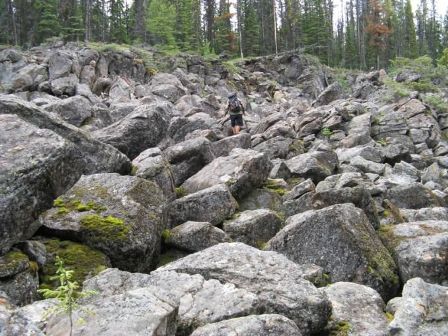
Denison-Bonneau Park offers an abundance of post-volcanic and glacial history; however, this exceptional feature of the park is not well studied or documented. Rock hoodoos hidden in the forest define an age when the Earth was a torrent with lava and volcanic vents. Because the area is remote and largely unknown, much of the secrets of this geological landscape have yet to be revealed.
The area is probably an erosional remnant of an extensive volcanic complex that developed after a huge chasm split open the Earth’s crust along the ancestral Okanagan Valley possibly 60 million years ago, in early Tertiary times. The site then witnessed the last significant geologic event here, which involved erosion by thick glaciers and ice sheets that periodically ground their way across the land during the Ice Age that began about two million years ago.
The Okanagan and most of British Columbia may have been glaciated at least six times. The latest glacial event is known as the Fraser Glacier that advanced 20 to 25 thousand years ago, and began to melt about 15,000 years ago. As the glacial melt occurred some of the landscape became submerged under water while high points in the Okanagan Highlands where Denison-Bonneau Park is found, served as islands which may have eventually formed a land bridge that meandered between two great inland seas.
The First People
Little is known of the First Nations cultural values and uses within the park. However, it is believed through traditional First Nations knowledge that the area was frequented in pre-colonial times by members of the Okanagan Nation (Syilx) as well as the Shuswap Nation (Secwepemc) for hunting and gathering. Because of its retention of intact old-growth forest and other natural values, the park holds potential to support traditional activities of First Nations.
At present there are no registered archaeological sites within the park, as it is largely un-researched. The fact that the landscape within the park has remained largely unaffected by industrial logging has undoubtedly preserved First Nations cultural values and the park continues to provide a Okanagan Highlands setting in which food, social and ceremonial harvesting and practices can continue in a relatively undisturbed setting.
The park lies within the consultative areas of the Splatsin, the Okanagan Nation Alliance, Okanagan Indian Band, the Lower Similkameen Indian Band, and the Penticton Indian Band. The Splatsin have outlined interest in working on collaborative management of the park and supported the establishment of the park. Prior to designation, the Splatsin voiced concerns over the size and configuration of the park, stating that a larger boundary would have better protected their aboriginal interests. There was also concern over the rate and spread of industrial logging adjacent to the park boundary.
The Okanagan Nation Alliance (which includes the Penticton Indian Band, the Lower Similkameen Indian Band and the Okanagan Indian Band) although recognizing the importance of the site’s conservation and cultural heritage values, cite that they do not support parks and protected areas that were established as an outcome of the Okanagan Shuswap Land and Resource Management Plan. BC Parks hopes the ONA’s interests can be reflected in the park’s management objectives and strategies as outlined in the Park Management Plan.
Activities in the Park
BC Parks recognized that local residents close to Lumby and Cherryville have been the predominant users of the area, as well as residents and visitors of the City of Vernon (located approximately 40 km to the west).
Denison-Bonneau Park, in its entirety (376 hectares), is zoned Nature Recreation so motorized use is not permitted in the park and the recreational focus of the park is on day-use activities (e.g., angling, hunting, wildlife viewing, and nature appreciation) and backcountry camping opportunities.
Recreational activities in the park include hiking, camping, angling, wildlife viewing, nature appreciation and hunting. Forest in-growth (low canopy) along the main trails to the lakes and generally rough topography, preclude the use of the park by horse riders. Mountain biking may be feasible to Denison Lake; however, thus far mountain biking is a very infrequent activity in the park because of its remote location.
Opportunities for hiking in the vicinity of the lake are limited to areas where established trails are located. There are no trails that circumnavigate either lake. The majority of recreational use is by local residents and anglers (particularly at Denison Lake- the smaller of the two lakes within the park which is the most accessible).
The park contains a small waterfall at the outlet of Denison Lake as well as some excellent cliff terrain in which to take in views of the surrounding landscape. There is a rich post-volcanic landscape characteristic to the park which adds diversity to the park’s recreational values.
Rustic (walk-in) camping opportunities exist both at Denison Lake and Bonneau Lake. Denison Lake can currently accommodate 4-5 tent sites, whereas Bonneau Lake has a smaller footprint (2- 3 sites). Current use at Denison Lake is from hikers/backpackers whereas Bonneau Lake was being used (prior to park establishment) by a low number of hikers and some ATV users. Denison Lake was part of the former BC Forest Service recreation site system.
Prior to park establishment, ATV (All Terrain Vehicle) riders maintained a short 1 km section of trail leading to Bonneau Lake. Single track hiking trails (not conducive for motorized uses) leading to, and in the general vicinity of, Denison Lake (specifically to access a former Forest Recreation Site located along the shores of the lake) appear to have been maintained by volunteers.
Both Denison and Bonneau lakes are popular amongst anglers. Local groups (e.g., the Vernon Fish and Game Club) have indicated the lakes in the park are a destination for many of their membership. The Vernon Outdoor Club has voiced interest in continuing their trail maintenance for the park (specifically to Denison Lake).
Species and Ecological Communities
of Conservation Concern
Although formal species and habitat inventories within the park have not yet been fully conducted, known research indicates that the park supports habitat for several red and blue-listed species and ecological communities at risk.
The conservation role of Denison-Bonneau Park is to protect an old growth sub-alpine forested ecosystem which contains two pristine freshwater lakes. Although the land area adjacent to the park has been heavily impacted by industrial logging and road building, the park provides essential habitat for numerous species at risk, particularly Grizzly Bear. The freshwater component of the park contains intact riparian areas and supports habitat for a range of waterfowl, fish and aquatic species.
Denison-Bonneau Provincial Park offers the Monashee an eco-tourism gem that mixes mysterious insight in the ancient geological beginnings here with the unique less disturbed habitat of the Okanagan Highlands. For locals seeking to explore their wild backyard off the beatern path – this place should not be missed.